Smart Traffic Management System
← RETURN TO BASE
🏆 INDIA #1 GOV. RECOGNIZED PATENT FILED

Digital Traffic
Management System

Smarter Roads.
Faster Ambulances. Safer Cities.

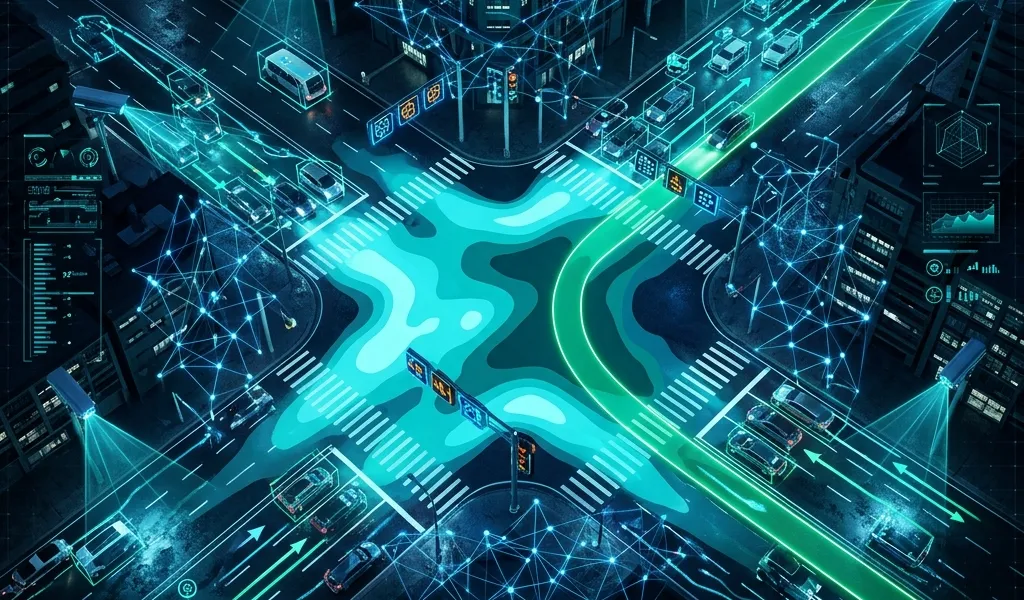
An ML-powered traffic ecosystem that dynamically controls city signals, prioritizes emergency vehicles, detects potholes, and flags traffic violations — built and won at Smart India Hackathon 2019 against teams from across the entire country.
OpenCVTesseract OCRTensorFlowPythonNode.jsFirebaseGoogle Maps APIArduinoRaspberry PiIoTGPSAndroidSMPP ProtocolComputer Vision
Award ₹1,00,000 Prize
Rank #1 in India
Event SIH 2019
Patent 202041024036
Sponsor Maruti Suzuki
Recognition Gov. of India

What This System Does

🚦
ML Based Live Traffic Density
🚑
Emergency Vehicle Routing
🕳️
Pothole Detection
🗺️
Live Navigation (INS)
🖥️
Remote Control Interface

The Problem

> cat india_traffic_crisis.txt DECRYPTING...

India's traffic congestion problem isn't just inconvenient — it's lethal. Every day, 1,214 road crashes occur across the country. Most are caused by traffic violations or congestion-induced risk. In 2017 alone, 3,597 people were killed due to potholes.

Intelligent Transport Systems (ITS) exist in developed nations, but the cost of implementation, maintenance, and per-vehicle tracking is prohibitively high for India. Emergency vehicles — ambulances, fire engines — are stuck in the same traffic as everyone else. Not a single second saved when lives are on the line.

The Maruti Suzuki problem statement at Smart India Hackathon 2019 challenged teams across India: build a cost-effective, scalable, ML-driven traffic system that could actually be deployed on Indian roads — without replacing existing infrastructure.

Our Solution

> cat solution_overview.txt VERIFIED ✓

Instead of tracking every vehicle — computationally expensive and data-heavy — we use a Bay Detection approach: horizontal slot words painted on road surfaces are monitored by existing CCTV cameras. When vehicles obscure the words, density is measured instantly using OCR. This eliminates costly per-vehicle sensors entirely.

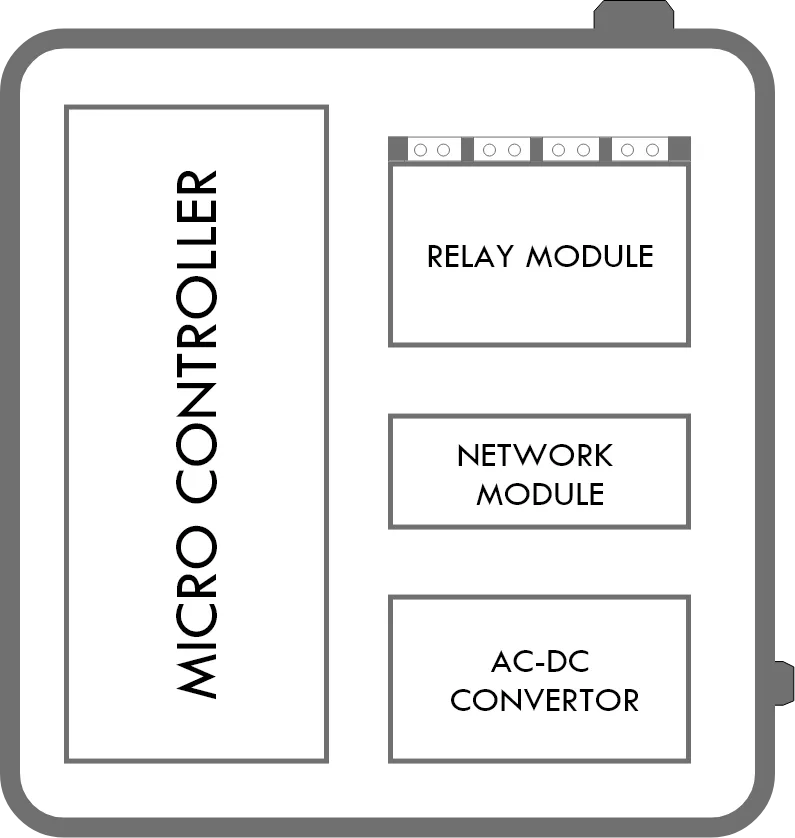
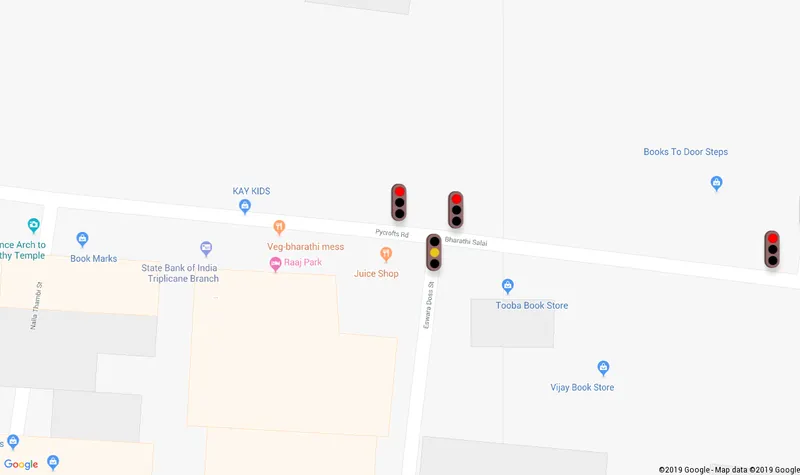
The Smart Traffic Controller (STC) device installs on any existing traffic light pole, making the system fully backward-compatible. It receives density values from the cloud and triggers signals dynamically — no fixed timing, no manual control required.

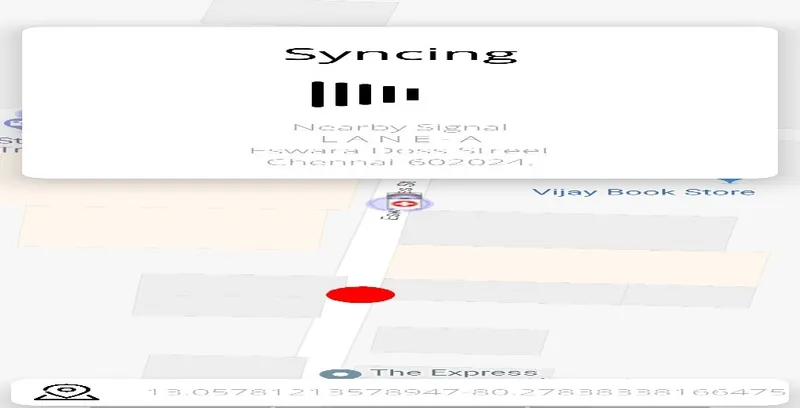
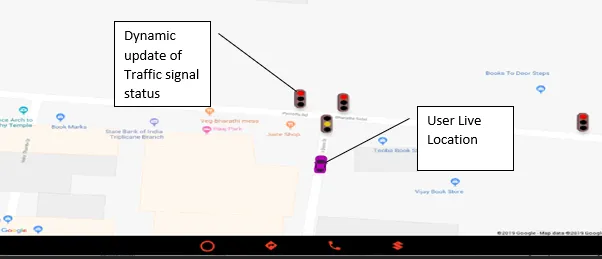
For emergency vehicles, our Intelligent Navigation System (INS) syncs with STC automatically when an ambulance enters junction range, creating an instant green corridor. Regular drivers are simultaneously notified via voice alerts. The system is self-healing: if the network drops, STC falls back to SMPP-based SMS, maintaining zero downtime.

8 Modules We Built

01 🚦

Traffic Density Calculation

Instead of tracking every vehicle, we painted horizontal slot words (BAY 1, BAY 2, BAY 3) on road surfaces. CCTV cameras use Tesseract OCR + OpenCV to detect which words are hidden by vehicles — giving a real-time density level (0–3) that dynamically triggers signal timing. No fixed timers, no wasted green time.

Traffic Density Calculation
02 🗺️

Intelligent Navigation System (INS)

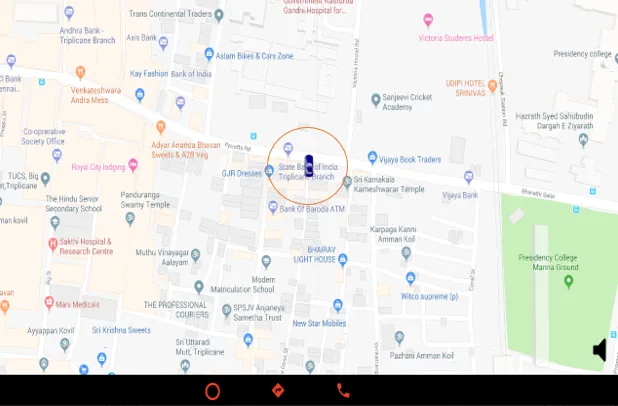
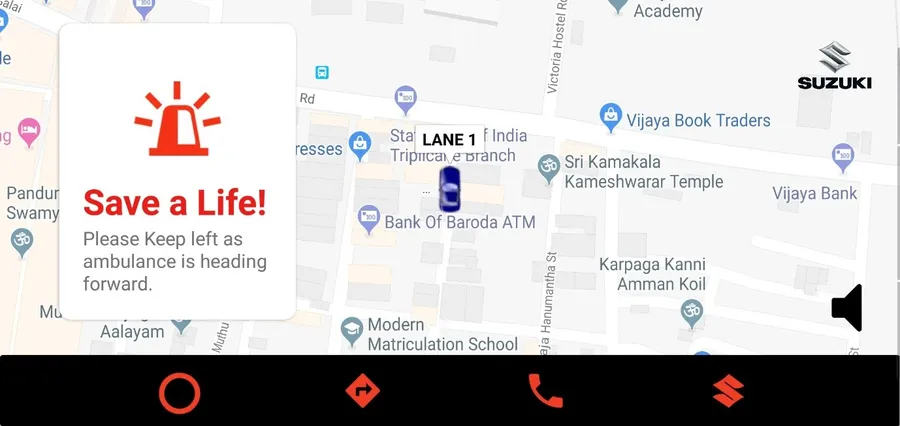
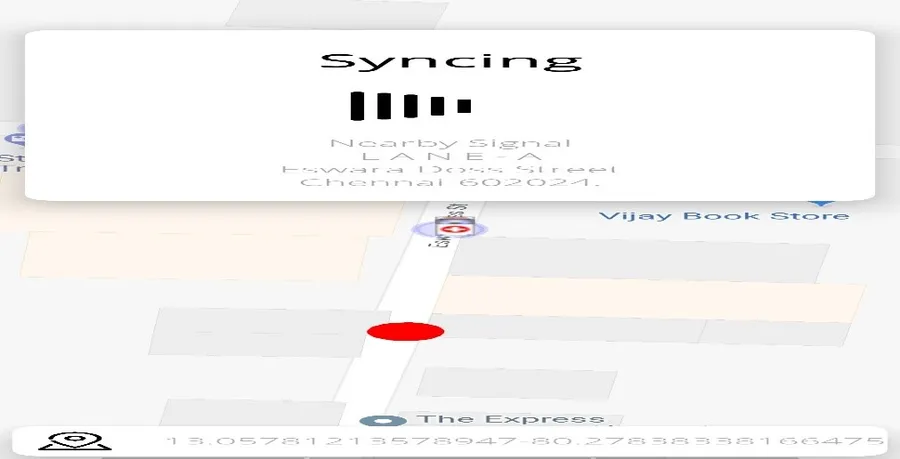
A dedicated GPS-based navigation system for emergency and regular vehicles. As an ambulance approaches a junction, INS syncs wirelessly with STC, turns that lane green, forces all others red — with zero driver interaction. Nearby drivers simultaneously receive: 'Save a Life! Please keep left as ambulance is heading forward.'

Intelligent Navigation System (INS)
03 📷

Traffic Violation Detection

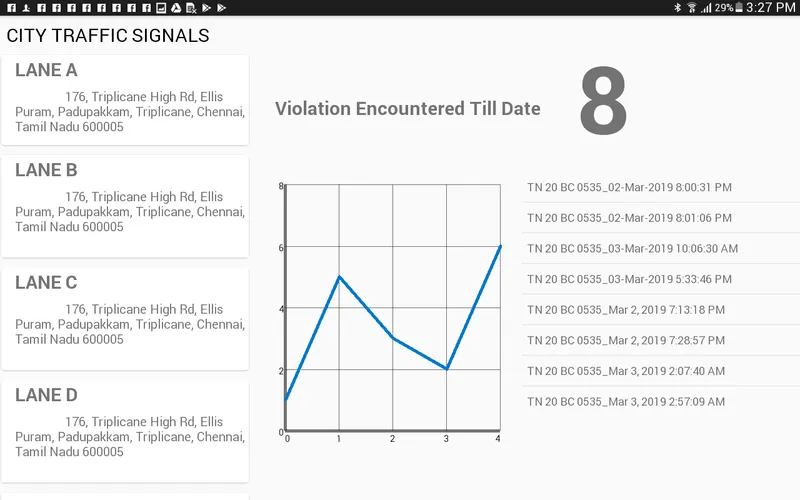
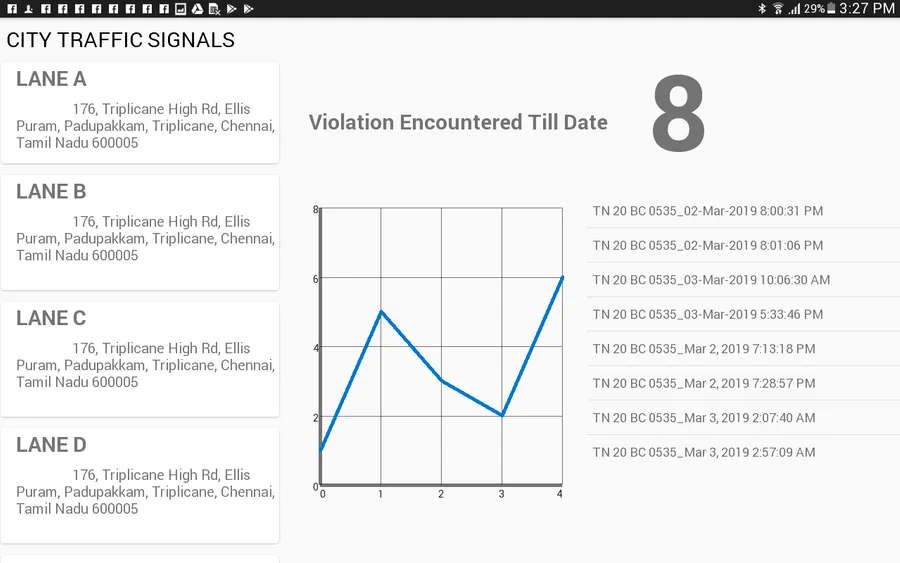
When a signal is red, the system scans for the stop line using computer vision. Any vehicle crossing the line is flagged — its license plate extracted via OCR and stored in the cloud with a timestamp. If CCTV is absent and the driver uses INS, the app captures the violation and pushes it to the server automatically.

Traffic Violation Detection
04 🕳️

Pothole Detection Module

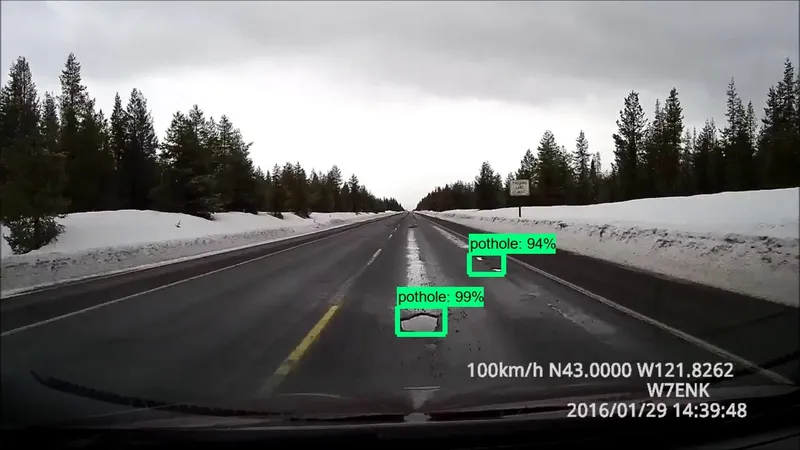
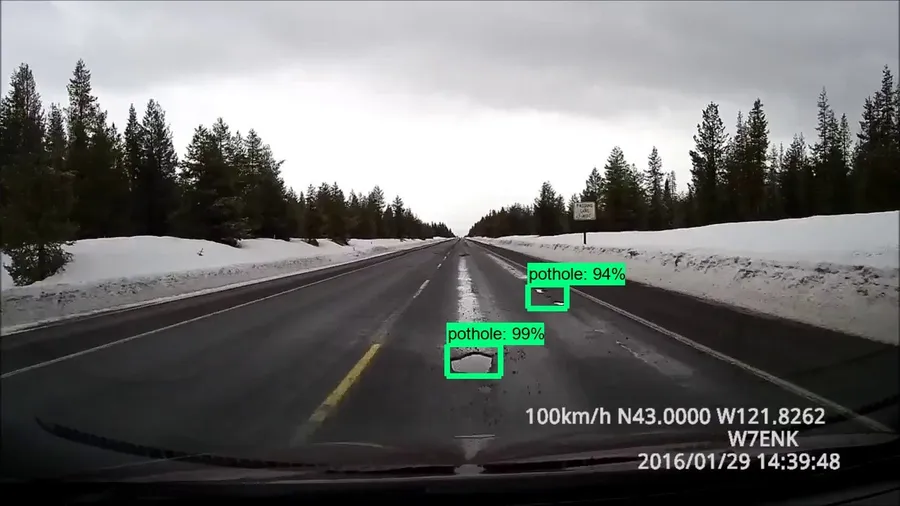
A trained object detection model running on dashboard cameras identifies potholes in real time with up to 99% confidence. The exact GPS coordinates are sent to the server and plotted on INS maps. Drivers approaching that location receive a geofenced alert — crowdsourcing road safety data for proactive government maintenance.

Pothole Detection Module
05 📡

Extraordinary Event Detection

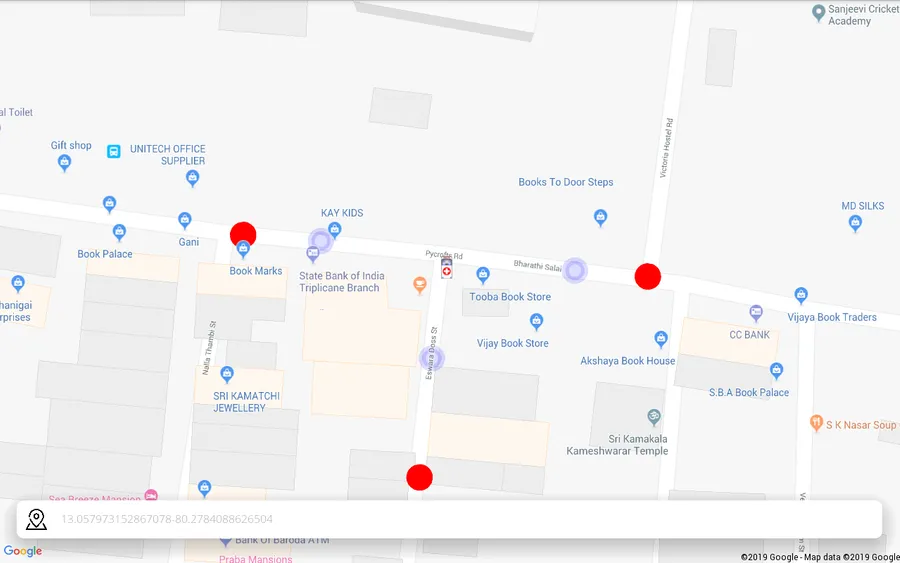
The system scrapes news articles and web headlines to detect protests, parades, VIP convoys, and accidents. Locations are extracted from the JSON payload and plotted as markers on the INS map. Data refreshes continuously so drivers re-route before reaching congestion. Police can also lock down road segments remotely.

Extraordinary Event Detection
06 🖥️

Control Interface (Cloud Dashboard)

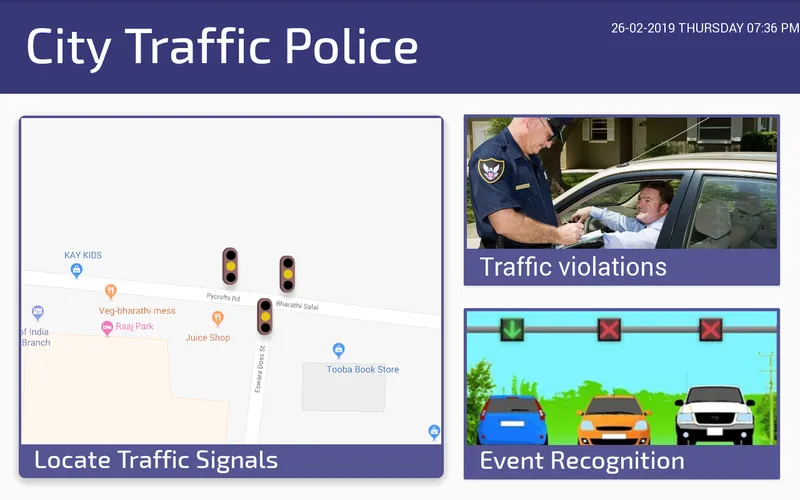
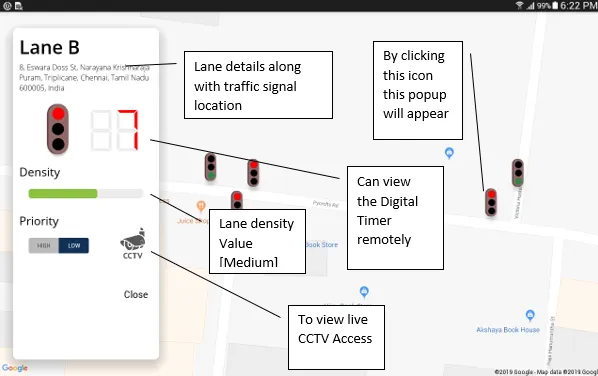
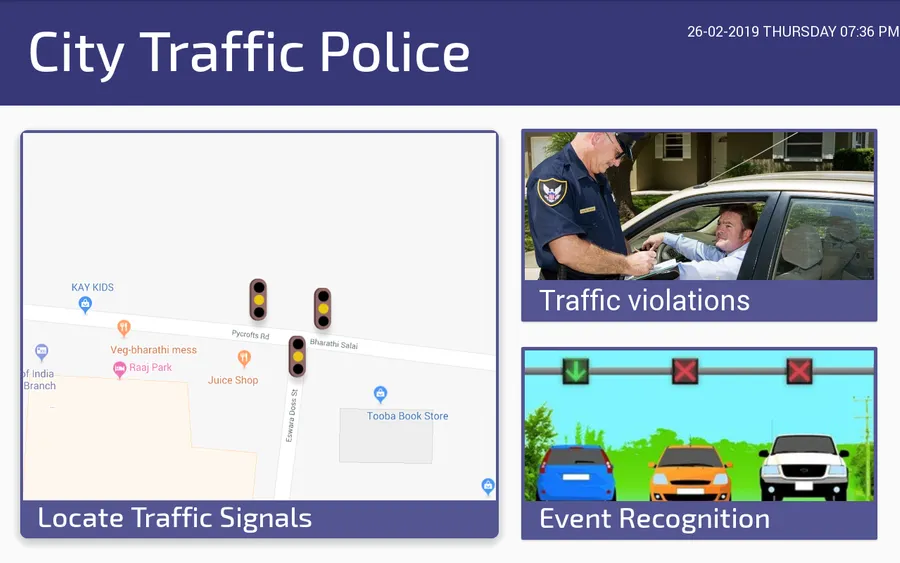
A centralized dashboard gives traffic police remote control over every signal in the city. Operators can view real-time density data, change signal states, block roads for special events, view live CCTV feeds, and monitor violation logs — all without stepping onto the street.

Control Interface (Cloud Dashboard)
07

Smart Traffic Controller (STC)

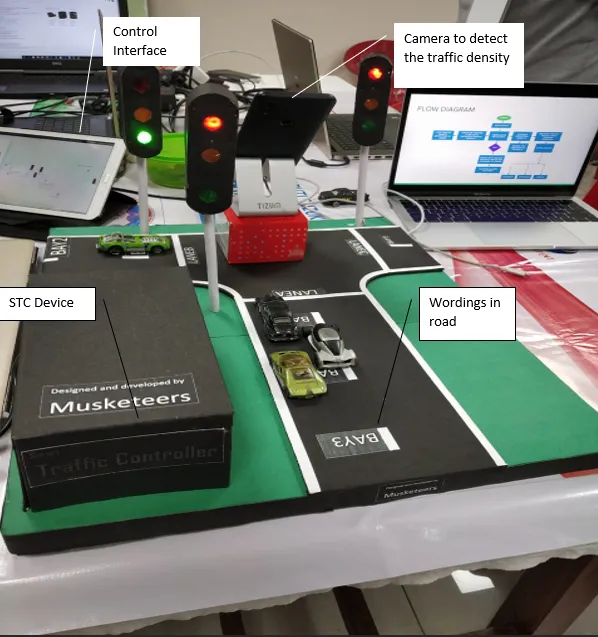
The STC is a hardware device installed on existing traffic light poles — no infrastructure replacement required. It runs on 240V AC converted to 12V DC, with a 4-channel relay. It communicates via a private network with the server. When offline, it auto-falls back to SMPP-encoded SMS via Non-cellular Data Transmission, ensuring zero downtime.

Smart Traffic Controller (STC)
08 🔔

Emergency Vehicle Prioritization

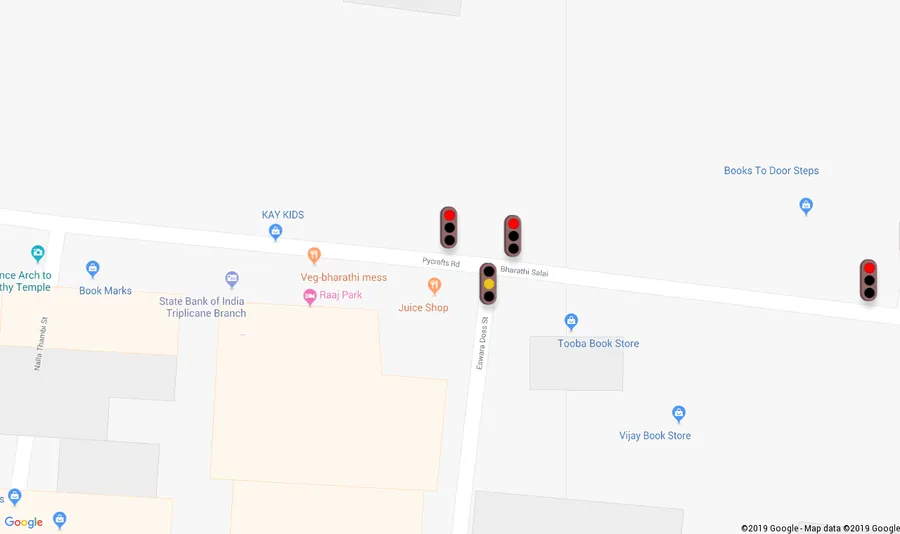
GPS modules embedded in ambulances broadcast real-time location. When the vehicle enters the pre-defined radius of a junction, INS and STC auto-sync: that lane turns green, all others red, and the state pushes to cloud — alerting all drivers along the route. The system coordinates multiple junctions simultaneously along the full emergency corridor.

Emergency Vehicle Prioritization

Bay Detection System

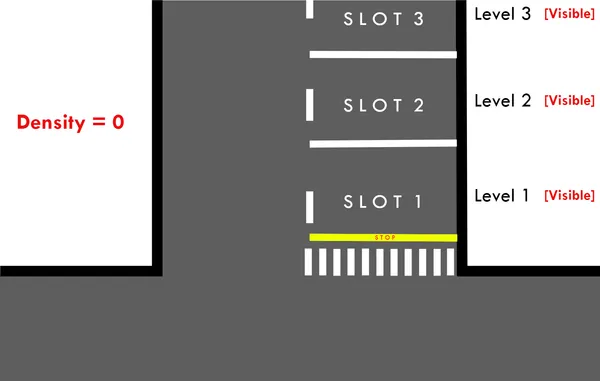
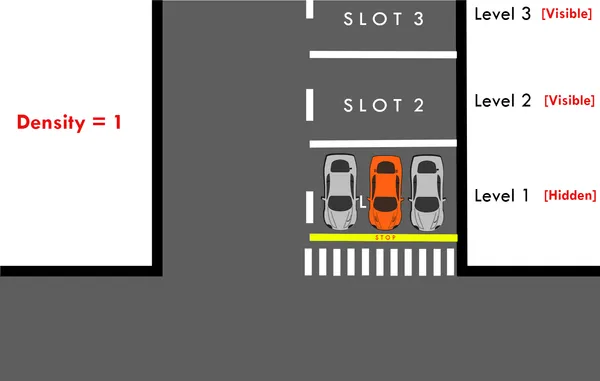
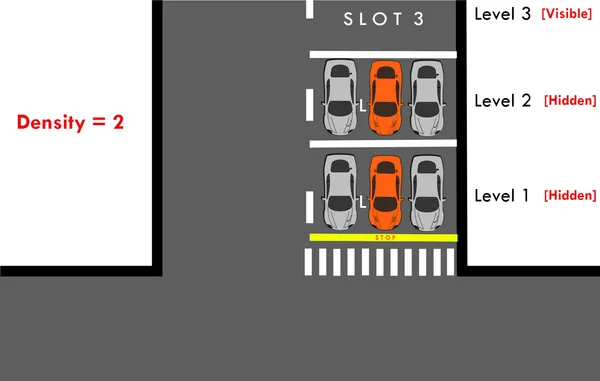
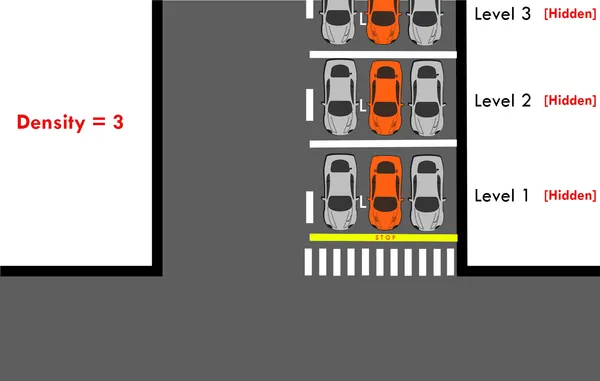
Each lane is divided into 3 bays with words painted on the road. CCTV cameras with OCR check which labels are hidden by vehicles, generating a density level 0–3. The STC device fires the exact green duration — no vehicles, no wasted green time.

LEVEL 0 NO SIGNAL
Level 0 bay detection

All bays visible. No vehicles. Green not triggered — saves unnecessary wait cycles.

GREEN DURATION
LEVEL 1 GREEN — 20s
Level 1 bay detection

BAY 1 hidden. Low density. 20 seconds of green — sufficient for queue clearance.

GREEN DURATION 20 SEC
LEVEL 2 GREEN — 40s
Level 2 bay detection

BAY 1 & 2 hidden. Medium density. 40 seconds for moderate traffic throughput.

GREEN DURATION 40 SEC
LEVEL 3 GREEN — 60s
Level 3 bay detection

All 3 bays hidden. Max density. Full 60-second green for complete intersection clearance.

GREEN DURATION 60 SEC

System Design

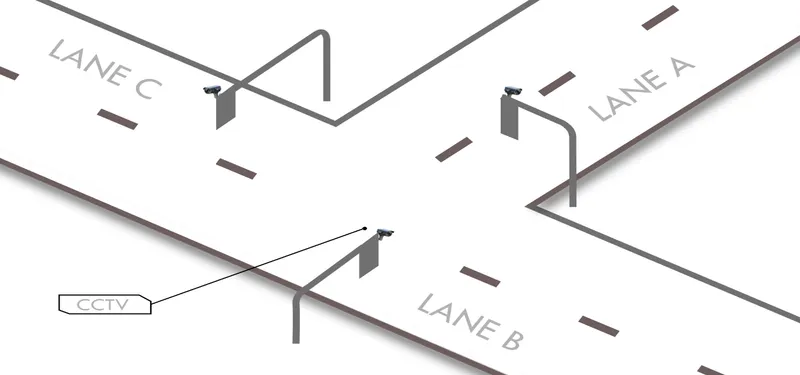
CCTV camera placement above traffic signals
CCTV PLACEMENT — Camera positioning for density detection
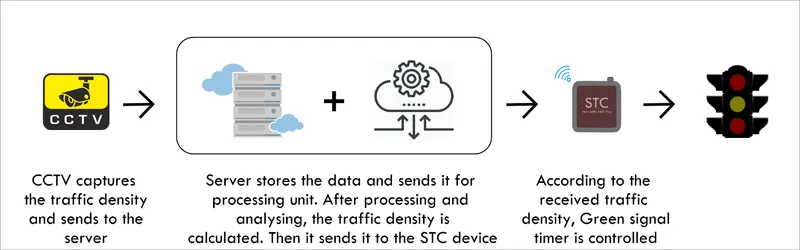
Communication with server flow diagram
SERVER FLOW — CCTV → Processing → STC communication chain

Patent & Publication

PATENT PENDING

Live Digital Traffic Management System

Registered under the Ministry of Commerce and Industry, Government of India. Application number: 202041024036. The entire concept — Bay Detection algorithm and STC hardware design — is IP-protected.

View Patent Document →
SPRINGER PUBLICATION

Intelligent Traffic Management using ML and IoT

Peer-reviewed research published in Springer Journal. Documents the full system architecture, ML models, and deployment results from the Smart India Hackathon 2019 prototype.

DOI: 10.1007/978-3-030-77637-4_2 →
COPYRIGHT RECORD

Digital Traffic Management Software Idea Copyright

Official software concept copyright registration covering the intelligent Bay Detection System and STC hardware interactions.

View Copyright Document →

Project Gallery

Prototype in Action

FILE: TRAFFIC_PROTOTYPE_DEMO.mp4 ● READY

Award & Recognition

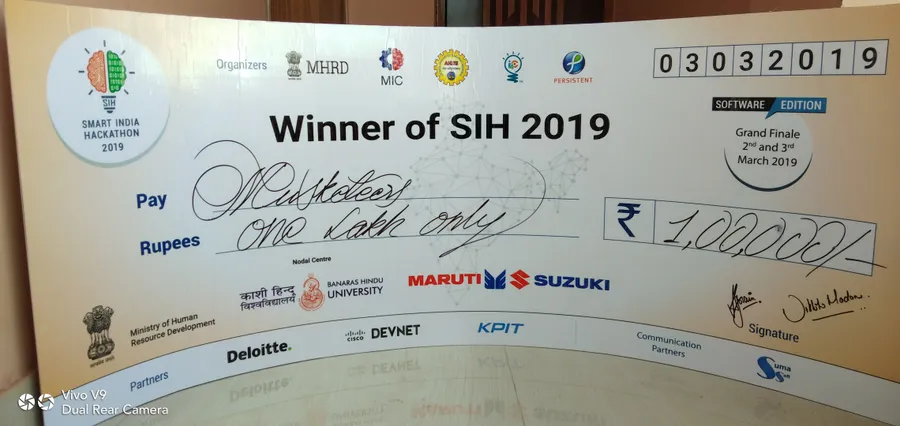
SIH 2019 Winner cheque — ₹1,00,000
₹1,00,000
Cash Award — One Lakh Rupees

Winner of Smart India Hackathon 2019

Grand Finale — Software Edition, 2nd & 3rd March 2019 at Banaras Hindu University, Varanasi. Team Musketeers was officially declared #1 by Maruti Suzuki and the Government of India.

📰

Media Coverage

Telecasted and published across multiple news channels and newspapers in India.

View media coverage →
🏛️

National Recognition

Recognized by MHRD (Ministry of Human Resource Development), Government of India, and endorsed by Maruti Suzuki at the national level.

📚

AICTE Acknowledgment

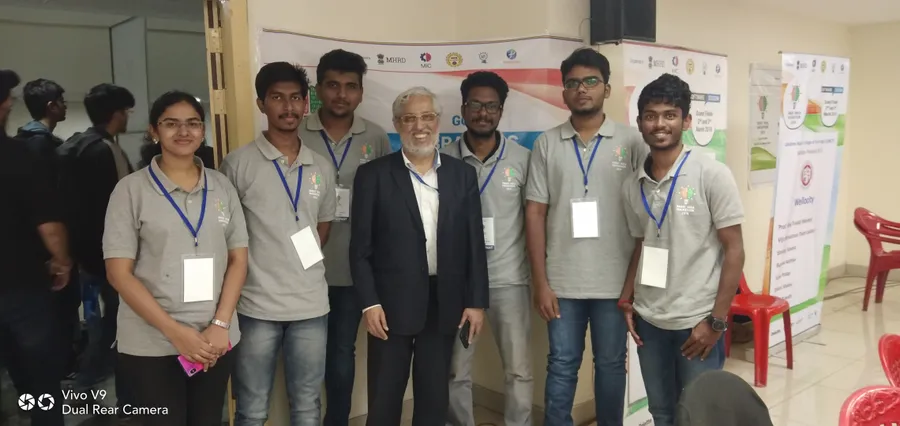
Team met with Prof. Anil D. Sahasrabudhe, Chairman of All India Council for Technical Education, at the Grand Finale ceremony.

Jury Panel

Abhijit Bora

Abhijit Bora

Deputy General Manager Maruti Suzuki India Limited

Nikhil Madan

Nikhil Madan

Senior Manager Maruti Suzuki India Limited

Team Musketeers

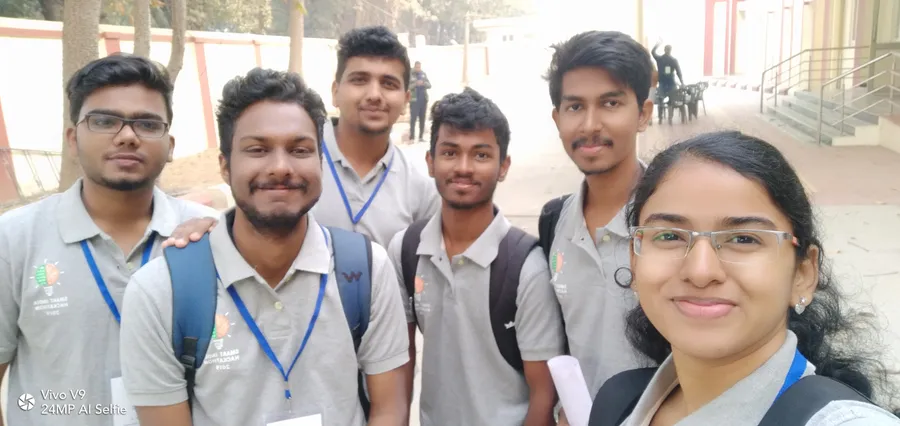
Team Musketeers with AICTE Chairman at SIH 2019
TEAM_SIH_2019 ● WINNERS
> cat team.txt 7 MEMBERS ACTIVE

A team of 7 engineers from Panimalar Engineering College, Chennai built this system end-to-end — hardware, ML, mobile, and cloud — in under 36 hours at the Grand Finale.

Sundeep Dayalan served as Lead Developer, architecting the full system and coordinating every module. The team name — Musketeers — is signed on the hardware prototype itself.

The project spanned from January 2019 to March 2019, covering ideation, prototype, hackathon win, patent filing, media appearances, and final Springer publication.

← RETURN TO PROJECTS